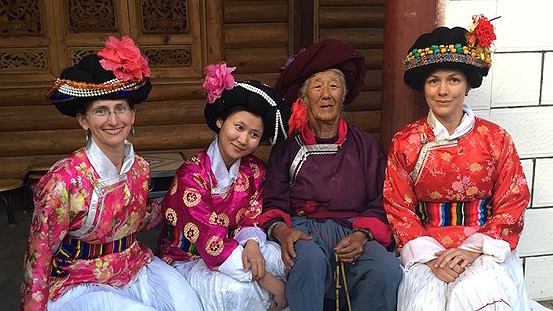
Matrilineal and Patrilineal are ways of categorizing family lineage and are commonly foundational parents of societies. Matrilineal societies trace descent or kinship through the female line, while Patrilineal ones trace them through the male line.
The linguistic roots of both of these words can be traced back to the Latin words for mother and father, matr and patr (also spelled mater and pater), and the English word lineal referring to one’s lineage. The United States and many other modern societies, for example, are considered a Patrilineal society, since familial ties are based on the male line.
So why do Anthropologists care so much about Matrilineal vs. Patrilineal categorization? Identifying whether or not ancient societies were patrilineal or matrilineal tells a lot about a society. Unlike the vast majority of societies today, Matrilineal societies center women at their cores. Women in these societies inherit family property, and all children belong to their mothers’ lineages rather than their fathers. Identifying whether or not societies are centered around a patriarch or matriarch gives important insight into human behavior and kinship.
In 2019, Siobhan Mattison, an assistant professor at UNM’s Anthropology Department, and some of her colleagues released an extensive study and opinion piece on the importance of women in matrilineal societies titled “The expendable male hypothesis”. The study discusses the general definition of materiality in both human societies and animal species, problematic assumptions about matriliny, and what she calls “The expendable male hypothesis” on how men interact with family structures.
A part of the study I found particularly interesting and relevant to the discussion on why the distinction between matrilineal and patrilineal matters was this particular quote: “Glass ceilings can invoke scientific findings to justify constraining women to roles related to mothering, but women do just about everything in some societies – planting, harvesting, childcare, politicizing – you name it. If nothing else, our study shows the vast flexibility in a human family and economic system, undermining any claims about universal differences in men’s and women’s capabilities and roles.”
 Anthro Log
Leave a comment