Author: Anisa Mukhtar

  • Takeaways From “Family matters: Primary gender socialization and gender-based violence in paid domestic work in Bolivia and Peru” by Nora Goffre

    Nora Goffre’s ethnographic study, grounded in fieldwork across Bolivia and Peru, reveals that paid domestic labor is deeply shaped by early gendered socialization, presenting a “regime of gendered and racialized appropriated labor”(source). She argues that domestic workers—mostly rural migrant women, often Indigenous or Afro‑Latin American—enter a cycle where exploitation in their birth families resonates within employers’ households and persists into their conjugal relationships 

    Contrary to the common perception of the family as a protective space, Goffre highlights how it can perpetuate violence. The sexual division of labor and normalized gendered roles within households lay the foundation for ongoing emotional, physical, and sexual exploitation. When these workers transition into paid domestic roles, the same norms become inscribed into work relationships, making violence and dependency systemic.

    Goffre positions paid domestic work as a blurred form of “appropriated labor”—where private, informal care becomes formally unpaid or underpaid labor, rooted in structural inequalities of class, race, and patriarchal norms. The prevalence of rural, ethnically marginalized women in this sector is a clear outcome of colonial histories and entrenched poverty.

    What stands out most to me in this study is Goffre’s intersectional framing: violence against domestic workers isn’t just gendered—it’s racialized and classed. Goffre critiques the failure of broader scholarly work to integrate these intersecting axes of oppression when analyzing household labor dynamics.

    Some More Key Takeaways:

    • Violence is normalized early: Gendered socialization in origin families lays the emotional groundwork for accepting abusive power dynamics.
    • Paid work reflects private oppression: Domestic employment often replicates familial exploitation patterns.
    • Labor is appropriated, not compensated: The merging of emotional care and wage labor functions as structural extraction.
    • Intersectionality is essential: Only by considering gender, race, and class together can we grasp the full depth of workers’ vulnerabilities.

    Goffre’s study serves as a powerful reminder that interventions aimed at protecting domestic workers must go beyond workplace regulations in order to enact real change. They must address the familial and societal norms that sanction harm, starting from childhood socialization through adulthood. Only then can the root cause of the harms done to the households and daily lives of some of Latin America’s most vulnerable laborers be addressed. For more information check out the full ethnographic study.
  • Takeaways from “Emprendedores and Luchadores: Cuban Entrepreneurship, Socialist State Retrenchment, and the Normalization of Racialized Exclusion” by Hope Bastian

    I recently read anthropologist Hope Bastian’s article Emprendedores and Luchadores: Cuban Entrepreneurship, Socialist State Retrenchment, and the Normalization of Racialized Exclusion, and found it super interesting. Here’s a summary and some of my biggest takeaways:

    First of all, in her article, Bastian explores the nuanced transformation of Cuban entrepreneurship from a frowned‑upon “necessary evil” in the 1990s to an officially embraced engine of economic development by the 2000s. But as Bastian compellingly argues, this shift isn’t enough to dismantle enduring inequalities, particularly when it comes to racialized exclusion.

    Batisan further explains that the early reforms that legalized self-employment in Cuba were pragmatic responses to economic collapse, but they came with heavy moral baggage. Independent workers were stigmatized as betraying revolutionary values and succumbing to capitalist individualism. It wasn’t until about a decade later that the state began celebrating these “emprendedores” as vital contributors to the national economy, yet the rhetoric of inclusion masked deeper tensions.

    What struck me most is Bastian’s observation that only certain entrepreneurial actors were welcomed. Racial and class bias continued to shape who could succeed. She highlights how the promise of entrepreneurship remained largely out of reach for Afro-Cuban and lower‑income entrepreneurs. 

    My biggest Takeaways: 

    • Policy vs. Practice: Legalization alone does not guarantee equity. Racial and socioeconomic hierarchies persisted despite reform.
    • Moral Framing Matters: Public discourse is powerful; labeling some entrepreneurs as morally suspect enabled selective inclusion.
    • Incomplete Success: Celebrated entrepreneurship may actually reinforce systemic inequality unless paired with conscious efforts toward inclusion.

    Ultimately, Bastian’s work serves as a timely reminder that economic transformations, even when portrayed as progressive, can perpetuate injustice without intentional measures to ensure equity. This case study invites broader reflection on reform efforts worldwide: in emerging markets and post‑socialist societies alike, we must ask, “Who is really included, and who remains sidelined?”. For more information and the full study, I encourage you to check out this link.

  • The Ajami Manuscripts & Their Importance

    Recently, I’ve read up on some of Anthropologist Dr. Fallou Ngom’s work, particularly his book, Muslims Beyond the Arab World: The Odyssey of Ajami and the Muridiyya. His book details the use of Ajami writing and documentation of various African communities alongside the rise of the Muridiyya Sufi order in Senegal. 

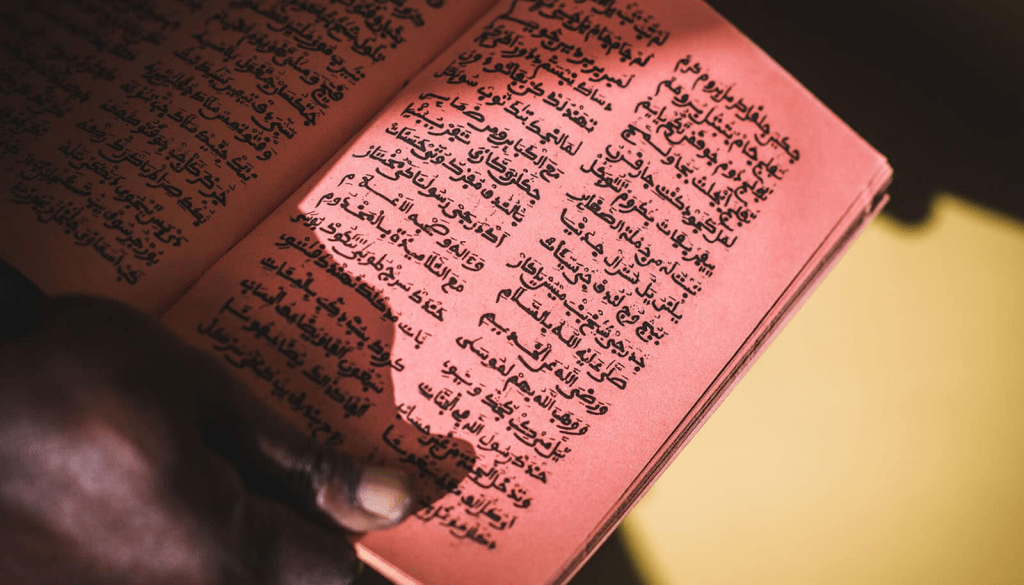
    But what exactly are the Ajami Manuscripts and why do they matter? Well, these handwritten texts, often overlooked in mainstream accounts of African literacy, are a testament to how African societies adapted global influences—specifically Arabic script—to preserve their own languages, knowledge systems, and cultural practices.

    Ajami (from the Arabic word ‘ajam, meaning “foreign” or “non-Arab”) refers to the use of the Arabic script to write African languages like Hausa, Wolof, Fulfulde, Mandinka, and others. This writing system dates back to at least the 11th century, emerging alongside the spread of Islam across the Sahel and West Africa. What fascinates me is how local scholars and scribes used Ajami not just to translate religious texts, but also to write poetry, record histories, draft legal documents, and share medical and astronomical knowledge.

    In places like Kano (in northern Nigeria) and Timbuktu (in Mali), Ajami became a scholarly tool that blended Islamic teachings with indigenous knowledge. Hausa Ajami, for example, includes entire literary traditions—from epic poems praising local rulers to instructional texts on herbal medicine. This counters the myth that African societies lacked written records before colonialism. In truth, literacy in Ajami was widespread among Muslim communities well before the introduction of Western-style education.

    What strikes me most is how Ajami manuscripts served as a cultural bridge. They preserved oral traditions in written form while embedding them within an Islamic literary framework. In my view, this challenges the colonial assumption that only Roman script counts as “real” literacy. 

    Today, scholars and archivists are racing to digitize and preserve these fragile documents. Projects like the Ajami Research Project at Boston University, headed by Dr. Ngom, are helping to catalog and translate these texts for future generations.

    Perhaps what’s most important about these manuscripts is that they are more than relics; they’re living records of African agency, identity, and adaptation in the global Islamic world.

  • Who Are the Hausa People of West Africa?

    Recently, I’ve spent the past couple of days drafting my personal statement for college applications. And with that process comes much self-reflection and identity building. Because of this, I’ve found myself being much more intrigued by my native culture, especially the more nitty gritty aspects that I wouldn’t know about despite living as a Hausa person. This post, therefore, aims to educate people on some aspects of the Hausa people. 

    With a population estimated at over 80 million, the Hausa are one of the largest ethnic groups in Africa, spread primarily across northern Nigeria and southern Niger, but also found in Ghana, Cameroon, and Sudan due to centuries of migration and trade.

    The Hausa have a long-standing reputation as skilled traders. Historically, they were central to the trans-Saharan trade routes, exchanging goods such as leather, textiles, kola nuts, and later, gold and slaves with North African merchants. Cities like Kano, Katsina, and Zaria became major urban centers, serving as hubs for commerce, Islamic scholarship, and artisan industries (Falola & Heaton, 2008).

    Islam plays a major role in Hausa culture. Introduced as early as the 11th century, Islam became firmly entrenched in Hausa society by the 15th century, influencing everything from architecture and education to clothing and gender roles. Islamic schooling (makaranta) has long coexisted with traditional Qur’anic education, shaping not just religious beliefs but also the Hausa language itself, which uses an Arabic script called Ajami alongside the Latin alphabet.

    Yet, what I find most interesting as a Hausa woman is how the Hausa maintain a strong cultural identity while adapting to modern change. Traditional customs like kulle (purdah)—the seclusion of women—persist in conservative communities, especially among the upper classes, though many Hausa women today, like the women in my family, participate actively in business, politics, and education. This blend of conservatism and adaptability offers a rich area of study on how global and local forces interact.

    Music, too, reflects this duality. Traditional praise singers (griots) still perform at festivals and ceremonies, but Hausa pop artists are blending traditional instruments with hip-hop and Afrobeats. Artists like Ali Jita and Barmani Choge are helping keep the language and culture alive in modern forms.

    Studying my own culture and pulling knowledge from my personal experiences reminds me that cultures are not static. They are dynamic, deeply rooted in history, yet responsive to the forces of globalization.

    For more information check out: Hausa people | EBSCO Research Starters

  • The Women and Men of the Huns: Not just Villains in Disney’s Mulan

    Mulan and Shan Yu

    Consider this stream of questions:

    1. Have you seen the Disney movie Mulan? 
    1. Do you remember the powerful and ruthless Huns, i.e., the main villains of the story championed by their golden-eyed leader, Shan Yu?
    1. Do you remember the fact that somehow, one of the only characters who was unfazed by Mulan’s being a woman was the murderous and evil villain of the story? (What are the odds??)

    Well, if the answer to all three questions is yes, then I’m here to finally satisfy your insatiable curiosity on the matter by explaining why:

    The Huns were actually a real group of people. Their origins are somewhat unknown and debated amongst historians. According to History , “Some scholars believe they originated from the nomadic Xiongnu people who entered the historical record in 318 B.C. and terrorized China during the Qin Dynasty and during the later Han Dynasty.” Some even go as far as to say that they were so egregious that the Great Wall of China was built to help protect against the mighty Xiongnu, though this hasn’t been proven. Other historians, though, believe that they may have origins in Kazakhstan or elsewhere in the central and eastern parts of Asia.

    Following their arrival in southeastern Europe near 370 A.D., they continuously conquered territory for almost 70 years. Their defining characteristic lies in their unbelievable military prowess and horsemanship. Their brutal conquests granted them a reputation as “ruthless, indomitable savages”.

    You may be thinking, “Okay, that’s cool and all, but what does that have to do with the relationship between two characters in a Disney movie?”. So let’s connect the dots. 

    What’s very intriguing about the Huns was the heavy involvement of women in many aspects of their society (including the military!). The Huns uniquely used archery as their main weapon, allowing women to both participate and excel in their military since they could avoid combat reliant on physical strength. And so, it was considered fairly normal to fight alongside women in the Hun army.

    The Huns are one of many groups in human history that may not have aligned with traditional views on social organization (in many ways). So learning about them, especially the role women have, helps challenge our preconceived notions that society has and always must be so patriarchal. 

    So, all that being said, with Shan Yu being Hun, it’s incredibly unsurprising that this great, formidable foe and equal in battle was a woman; it didn’t faze him, and why would it? And now, after learning a little about the role of women in the Huns, it no longer fazes you either!

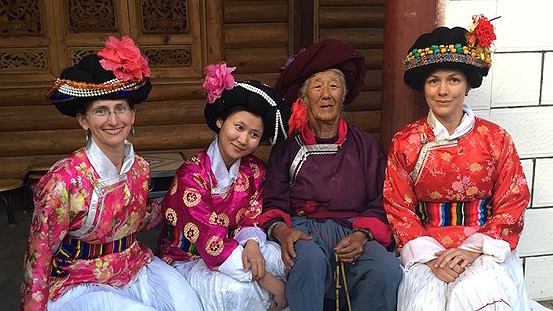
  • New Information About Matrilineal Neolithic Chinese Community

    Earlier this month, Nature published an fascinating study focused on the Fujia archaeological site in eastern China (around 2750–2500 BCE). By analyzing ancient DNA, burial patterns, and isotope data from sixty individuals across two cemeteries, researchers have illuminated a striking example of a matrilineal community in Neolithic times. 

    What was most interesting for me about the study was how the cemeteries functioned almost like clan identifiers. Each cemetery was essentially dominated by one of two maternal mitochondrial haplogroups. That means individuals sharing the same maternal lines were buried together (a clear hallmark of matrilineal clan organization). 

    Additionally, mitochondrial DNA revealed striking homogeneity within each cemetery, reinforcing that burial was determined by maternal lineage. Moreover, analysis of runs of homozygosity (ROH) showed high rates of endogamy, signaling that most marriages occurred within the community. Interestingly, however, these were not close‑kin unions. This suggests careful clan-based mate selection, preserving genetic variety while reinforcing social bonds (see bioengineer.org for more info).

    But why is this discovery so revolutionary? I mean- haven’t we uncovered many matrilineal societies previously? Well, This matrilineal structure at Fujia challenges long-held assumptions that prehistoric societies were predominantly patriarchal, making it a pretty important discovery in the field. Historically, figures like Bachofen and Morgan theorized that early societies were matrilineal before evolving into patriarchies, but until now, genetic substantiation as concrete proof has been missing. This discovery, however, is now a rare, well-documented case of long-lasting matrilineality, where lineage and burial were firmly defined by maternal descent.

    In other words, This study now allows us to reframe our previous understanding of prehistoric social complexity. Matrilineal systems weren’t merely theoretical, but genuinely deeply rooted in lived human experience. The Fujia findings highlight how kinship, identity, and social organization in early agricultural societies were far more varied and regionally specific than previously thought.

    Perhaps the most exciting aspect of technological advancement in the biological anthropology field is the new ways we can re‑ examine kinship systems in prehistoric societies worldwide. By combining genetics with archeological insight, we’re beginning to decode the rich diversity of early human social structures.

    Though I’m personally more interested in the cultural side of anthropology, it’s so fascinating seeing how biology can truly cement theories and discoveries in the field as facts.

  • Matrilineal vs. Patrilineal, What’s the Difference?

    Matrilineal and Patrilineal are ways of categorizing family lineage and are commonly foundational parents of societies. Matrilineal societies trace descent or kinship through the female line, while Patrilineal ones trace them through the male line.

    The linguistic roots of both of these words can be traced back to the Latin words for mother and father, matr and patr (also spelled mater and pater), and the English word lineal referring to one’s lineage. The United States and many other modern societies, for example, are considered a Patrilineal society, since familial ties are based on the male line. 

    So why do Anthropologists care so much about Matrilineal vs. Patrilineal categorization? Identifying whether or not ancient societies were patrilineal or matrilineal tells a lot about a society. Unlike the vast majority of societies today, Matrilineal societies center women at their cores. Women in these societies inherit family property, and all children belong to their mothers’ lineages rather than their fathers. Identifying whether or not societies are centered around a patriarch or matriarch gives important insight into human behavior and kinship. 

    In 2019, Siobhan Mattison, an assistant professor at UNM’s Anthropology Department, and some of her colleagues released an extensive study and opinion piece on the importance of women in matrilineal societies titled  “The expendable male hypothesis”. The study discusses the general definition of materiality in both human societies and animal species, problematic assumptions about matriliny, and what she calls “The expendable male hypothesis” on how men interact with family structures. 

    A part of the study I found particularly interesting and relevant to the discussion on why the distinction between matrilineal and patrilineal matters was this particular quote: “Glass ceilings can invoke scientific findings to justify constraining women to roles related to mothering, but women do just about everything in some societies – planting, harvesting, childcare, politicizing – you name it. If nothing else, our study shows the vast flexibility in a human family and economic system, undermining any claims about universal differences in men’s and women’s capabilities and roles.”

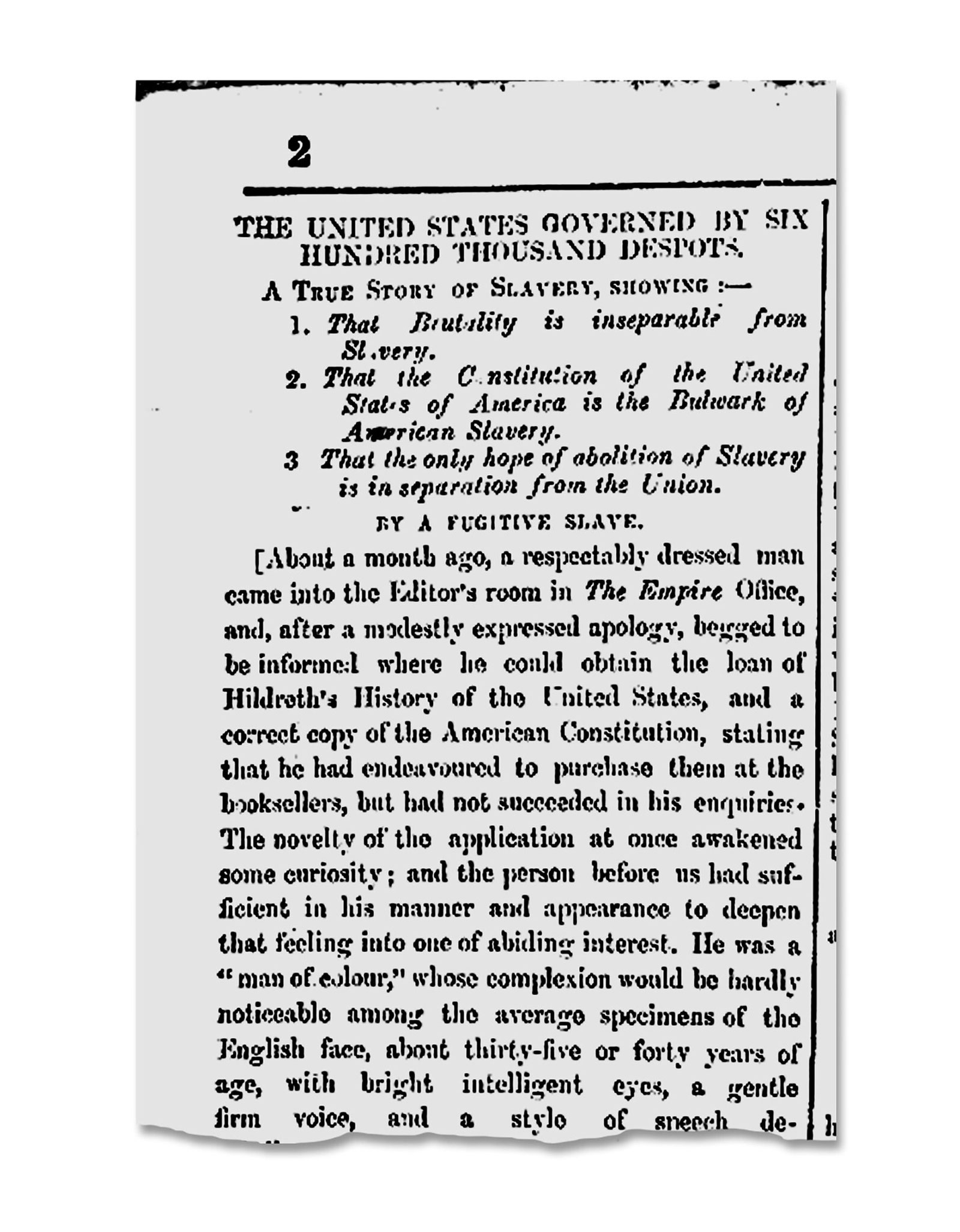
  • Reawakening Slave Narratives: The Lost John S. Jacobs Autobiography

    Literary scholar Jonathan D. S. Schroeder made a discovery of a lifetime earlier this year when he unintentionally found a lost slave narrative while searching in an online newspaper database.

    The narrative written nearly 170 years ago is an autobiography by John Swanson Jacobs, the brother to famous ex-slave and abolitionist Harriet Jacobs. Harrient Jacobs also authored the 1861 autobiography “Incidents in the Life of a Slave Girl”.

    The narrative boldy titled “The United States Governed by Six Hundred Thousand Despots” was originally published anonymously in two installments in Sydney, Australia. The book has now been edited and republished by Schroeder.

    The aspect of this discovery and narrative that I found most compelling was the rawness of it all. Most slave narratives were heavy handedly edited by white abolitionists and thus heavily censored. For the almost 20,000 word text to remain largely unchanged is remarkable.

    Jacobs’ harsh criticism of American liberty and democracy give such an important and real insight to the lives, thoughts, and feelings of the enslaved. Among these criticisms was a striking quote where he refers to the Constitution as a “devil in sheepskin”.

    Constitution allowed for and protected an atrocity such as slavery for centuries, while ironically preaching ideas of freedom and equality and condeming the opressive government they revolted against; a true devil in sheepskin indeed.

    Jacobs’ narrative and story is also unique in the fact that he spends much of his life outside of the United States. Much of his critisisms stem from his ability to compare his treatment in America to a much better lived experience as a black man in other countries. His experience perpetutes an often uncomfortable fact for many Americans: our land of equality and freedom doesnt even extend to the very people who built it, and other countries simply do the “American” ideas of liberty much better.

    His time travelling the world also forces us to check ourselves on the single slave narrative we often think of. Jacobs’ life is a direct challenge on our limited understanding of our history. His story resurfacing now broadens our perspective and re-writes the history of slave narratives forever.

    This incredible discovery makes me wonder what other narratives have been lost out there, but may still have a chance of being rediscovered.

    I actually had the incredible honor of meeting Mr. Schroeder himself when he came and gave a talk at my high school in early November, and hear his first had account of his experience. If you are interested in reading more about the actual process of his discovery I’d highly recommend reading the New York Times article on the subject.

  • “Qualification” In the Candidates of the 2024 Presidential Election

    A common topic I saw among Americans this election was the candidates qualification. Sadly yet unsurprisingly there were many men who claimed Kamala Harris was “unqualified” for the job of president and that she was “useless” during her term as Vice President. But if were being serious, when has a vice president ever really done anything of note? Why not look at some of her qualifivations rather than making up a lack thereof. Something many people may not know, or rather choose to ignore, is that Kamala has worked for years in all three branches on government. She was a prosecutor for three decades, then became the first woman ever to be Attorney General of California, then became a senator, and is now finishing her tern as Vice President of the United States.

    Former President Trump, on the other hand, was the only U.S president to ever have no political or military service prior to presidency. He was also one of three Presidents to ever be impeached (twice I might add), and earlier this year was the only president to every be convicetd of a felony (34 counts). Yet Kamala is the unqualified one?

    So why is it that people sp often call Kamala unfit or unqualfied to be president but the same isnt really said about Trump? Simply put, the answer is misogny. Its an increbily common social phenonon to belittle womens achivements in order to uphold male superiority. Women are even socialized to belittle their own achivements, for if they so they’re deemed too prideful or egotisical.

    A saying I think about frequently is something along the lines of “women have to work twice as hard for half as much,” which so closely applies here. Kamala Harris was twice as qualified yet still lost by such a big margin. Its disheartening that for the majority of Americans the choice between a convicted felon and rapist and a woman is a difficult one.

  • Attack on Titan Ending Sends Important Message About War

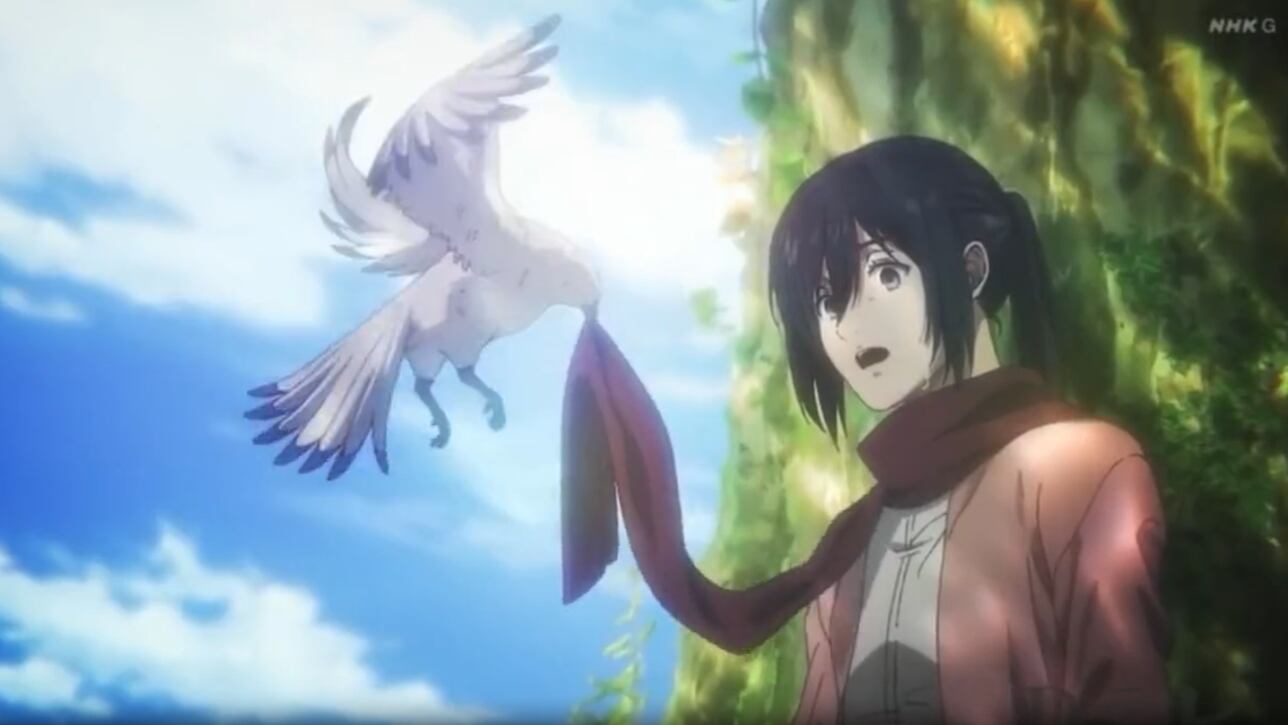
    The ending of the mega-hit Japanese manga and later anime adaptation “Attack on Titan” by author Hajime Isayama left many fans feeling unsatisfied. I however thought the ending was a realistic close to the series and perfect representation of the human condition.

    If you aren’t yet familiar with plot I’d highly recommend watching the show or doing some more in-depth research. It’s practically impossible for me to simplify the plot since every little detail counts. I think its best to just jump straight into the explanation.

    The very end of the final episode shows a time sequence where over thousands of years what’s left of humanity rebuilds civilization, destroyed itself again through war, and the story of Eren and the rumbling become a distant memory. Suddenly we see a small child enter a tree in the forest in the same manner as Ymir.

    To many fans, the ending may have felt redundant, posing the question “what’s the point of anything if we never learn?”. For me on the other hand, I interpreted the ending as a reminder that humanity pushes forward. We’ve never found solutions to war and achieved peace, and when we look back at history so many patterns and warning signs blare in our faces yet we never learn. Though the cycle repeats itself in the end, we saw a beautiful sequence of how humanity rose again from the ashes of an extinction level threat. Rather than offering a solution or displaying a pessimistic view that nothing will ever change, Isayama leaves the ending realistically open ended. Humanity will keep pushing forward even if it feels like time is moving backwards.

    I also felt that Erens complex character arc and sort-of redemption at the end was a brilliant choice. To simply vilify Eren in the end would be a waste of a really import question about human capability and monstrosity. Showing the complexities and emotions behind a man who did such an irredeemable and horrific thing holds a mirror up to mankind and forces us to accept that humans are indeed capable of being such “monsters”. It’s extremely important to humanize them in order to truly hold them accountable. it would be easy to write off Eren as a cruel villain and blame his “unchangeable” nature as his mortal flaw. But seeing his progression from the first episode to the last makes his being a villian much harder to swallow, since we know he chose to become one.

    There is still SO MUCH left to unpack out of just this series. It’s a goldmine of questions about freedom, oppression, love, humanity, war and so so so much more. In the future I hope to do a multiple part series going in depth about all the hidden motifs of the show.