Tag: news

  • Takeaways from “Emprendedores and Luchadores: Cuban Entrepreneurship, Socialist State Retrenchment, and the Normalization of Racialized Exclusion” by Hope Bastian

    I recently read anthropologist Hope Bastian’s article Emprendedores and Luchadores: Cuban Entrepreneurship, Socialist State Retrenchment, and the Normalization of Racialized Exclusion, and found it super interesting. Here’s a summary and some of my biggest takeaways:

    First of all, in her article, Bastian explores the nuanced transformation of Cuban entrepreneurship from a frowned‑upon “necessary evil” in the 1990s to an officially embraced engine of economic development by the 2000s. But as Bastian compellingly argues, this shift isn’t enough to dismantle enduring inequalities, particularly when it comes to racialized exclusion.

    Batisan further explains that the early reforms that legalized self-employment in Cuba were pragmatic responses to economic collapse, but they came with heavy moral baggage. Independent workers were stigmatized as betraying revolutionary values and succumbing to capitalist individualism. It wasn’t until about a decade later that the state began celebrating these “emprendedores” as vital contributors to the national economy, yet the rhetoric of inclusion masked deeper tensions.

    What struck me most is Bastian’s observation that only certain entrepreneurial actors were welcomed. Racial and class bias continued to shape who could succeed. She highlights how the promise of entrepreneurship remained largely out of reach for Afro-Cuban and lower‑income entrepreneurs. 

    My biggest Takeaways: 

    • Policy vs. Practice: Legalization alone does not guarantee equity. Racial and socioeconomic hierarchies persisted despite reform.
    • Moral Framing Matters: Public discourse is powerful; labeling some entrepreneurs as morally suspect enabled selective inclusion.
    • Incomplete Success: Celebrated entrepreneurship may actually reinforce systemic inequality unless paired with conscious efforts toward inclusion.

    Ultimately, Bastian’s work serves as a timely reminder that economic transformations, even when portrayed as progressive, can perpetuate injustice without intentional measures to ensure equity. This case study invites broader reflection on reform efforts worldwide: in emerging markets and post‑socialist societies alike, we must ask, “Who is really included, and who remains sidelined?”. For more information and the full study, I encourage you to check out this link.
  • New Information About Matrilineal Neolithic Chinese Community

    Earlier this month, Nature published an fascinating study focused on the Fujia archaeological site in eastern China (around 2750–2500 BCE). By analyzing ancient DNA, burial patterns, and isotope data from sixty individuals across two cemeteries, researchers have illuminated a striking example of a matrilineal community in Neolithic times. 

    What was most interesting for me about the study was how the cemeteries functioned almost like clan identifiers. Each cemetery was essentially dominated by one of two maternal mitochondrial haplogroups. That means individuals sharing the same maternal lines were buried together (a clear hallmark of matrilineal clan organization). 

    Additionally, mitochondrial DNA revealed striking homogeneity within each cemetery, reinforcing that burial was determined by maternal lineage. Moreover, analysis of runs of homozygosity (ROH) showed high rates of endogamy, signaling that most marriages occurred within the community. Interestingly, however, these were not close‑kin unions. This suggests careful clan-based mate selection, preserving genetic variety while reinforcing social bonds (see bioengineer.org for more info).

    But why is this discovery so revolutionary? I mean- haven’t we uncovered many matrilineal societies previously? Well, This matrilineal structure at Fujia challenges long-held assumptions that prehistoric societies were predominantly patriarchal, making it a pretty important discovery in the field. Historically, figures like Bachofen and Morgan theorized that early societies were matrilineal before evolving into patriarchies, but until now, genetic substantiation as concrete proof has been missing. This discovery, however, is now a rare, well-documented case of long-lasting matrilineality, where lineage and burial were firmly defined by maternal descent.

    In other words, This study now allows us to reframe our previous understanding of prehistoric social complexity. Matrilineal systems weren’t merely theoretical, but genuinely deeply rooted in lived human experience. The Fujia findings highlight how kinship, identity, and social organization in early agricultural societies were far more varied and regionally specific than previously thought.

    Perhaps the most exciting aspect of technological advancement in the biological anthropology field is the new ways we can re‑ examine kinship systems in prehistoric societies worldwide. By combining genetics with archeological insight, we’re beginning to decode the rich diversity of early human social structures.

    Though I’m personally more interested in the cultural side of anthropology, it’s so fascinating seeing how biology can truly cement theories and discoveries in the field as facts.

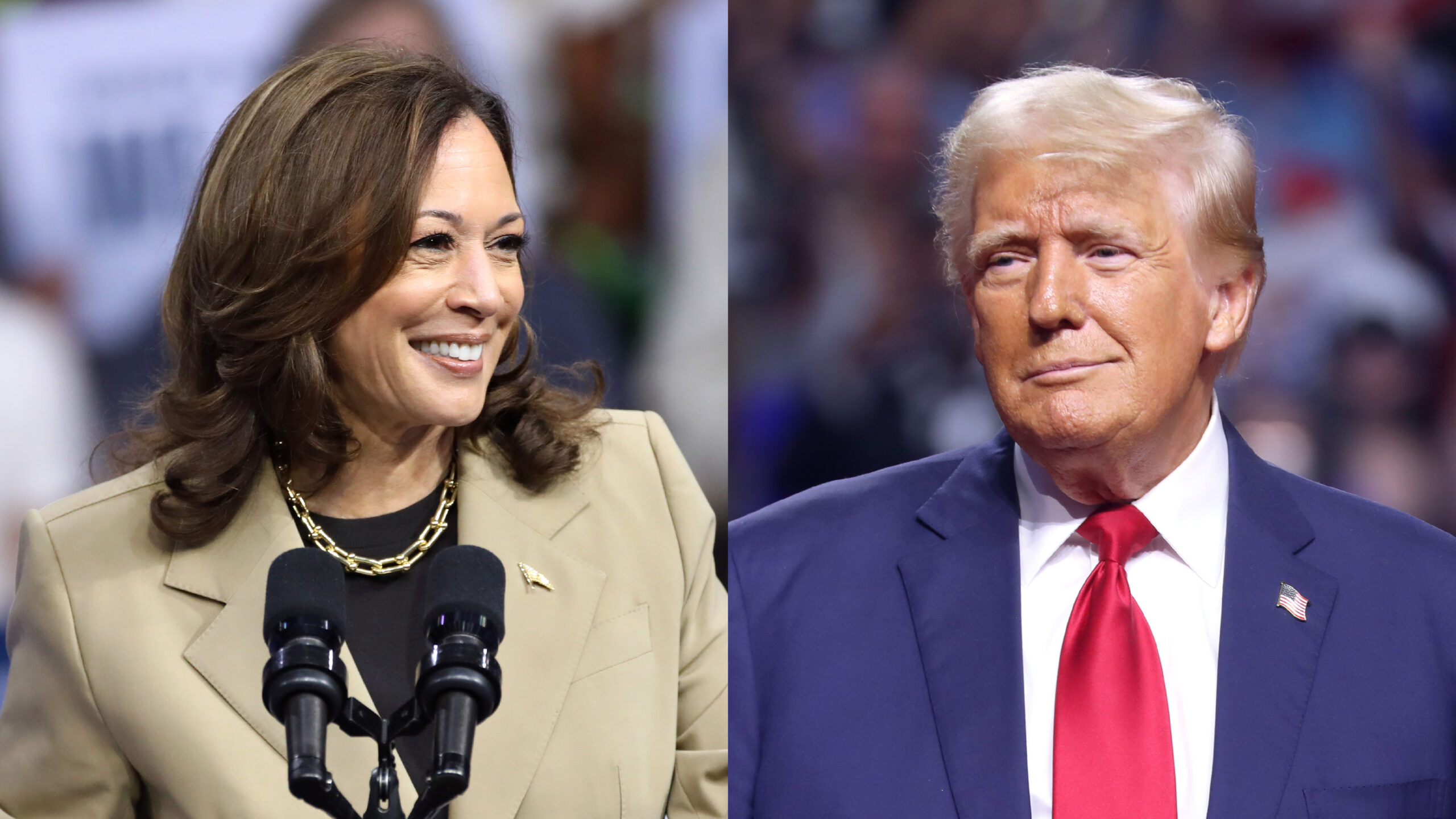
  • “Qualification” In the Candidates of the 2024 Presidential Election

    A common topic I saw among Americans this election was the candidates qualification. Sadly yet unsurprisingly there were many men who claimed Kamala Harris was “unqualified” for the job of president and that she was “useless” during her term as Vice President. But if were being serious, when has a vice president ever really done anything of note? Why not look at some of her qualifivations rather than making up a lack thereof. Something many people may not know, or rather choose to ignore, is that Kamala has worked for years in all three branches on government. She was a prosecutor for three decades, then became the first woman ever to be Attorney General of California, then became a senator, and is now finishing her tern as Vice President of the United States.

    Former President Trump, on the other hand, was the only U.S president to ever have no political or military service prior to presidency. He was also one of three Presidents to ever be impeached (twice I might add), and earlier this year was the only president to every be convicetd of a felony (34 counts). Yet Kamala is the unqualified one?

    So why is it that people sp often call Kamala unfit or unqualfied to be president but the same isnt really said about Trump? Simply put, the answer is misogny. Its an increbily common social phenonon to belittle womens achivements in order to uphold male superiority. Women are even socialized to belittle their own achivements, for if they so they’re deemed too prideful or egotisical.

    A saying I think about frequently is something along the lines of “women have to work twice as hard for half as much,” which so closely applies here. Kamala Harris was twice as qualified yet still lost by such a big margin. Its disheartening that for the majority of Americans the choice between a convicted felon and rapist and a woman is a difficult one.