Tag: religion

  • The Ajami Manuscripts & Their Importance

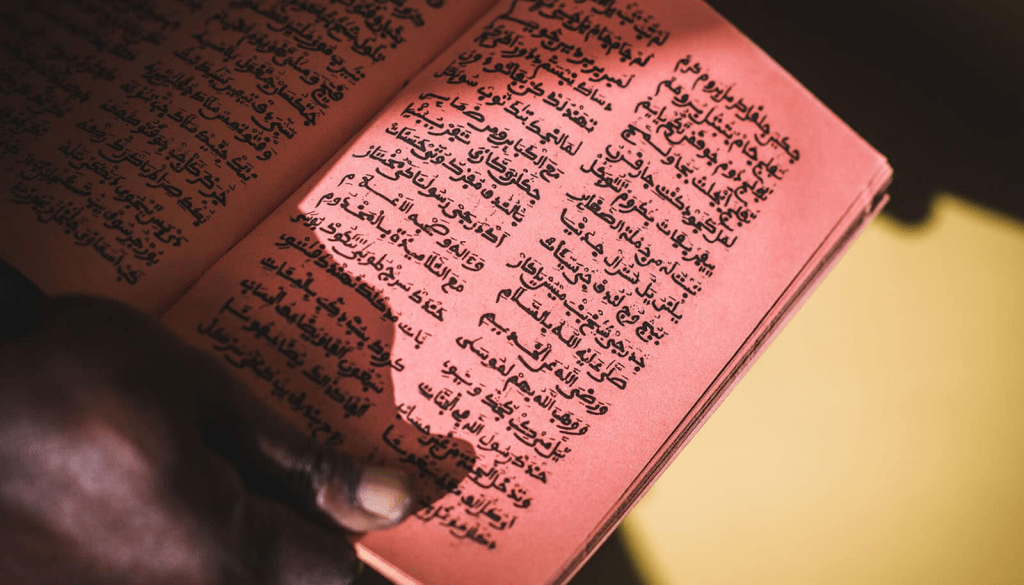
    Recently, I’ve read up on some of Anthropologist Dr. Fallou Ngom’s work, particularly his book, Muslims Beyond the Arab World: The Odyssey of Ajami and the Muridiyya. His book details the use of Ajami writing and documentation of various African communities alongside the rise of the Muridiyya Sufi order in Senegal. 

    But what exactly are the Ajami Manuscripts and why do they matter? Well, these handwritten texts, often overlooked in mainstream accounts of African literacy, are a testament to how African societies adapted global influences—specifically Arabic script—to preserve their own languages, knowledge systems, and cultural practices.

    Ajami (from the Arabic word ‘ajam, meaning “foreign” or “non-Arab”) refers to the use of the Arabic script to write African languages like Hausa, Wolof, Fulfulde, Mandinka, and others. This writing system dates back to at least the 11th century, emerging alongside the spread of Islam across the Sahel and West Africa. What fascinates me is how local scholars and scribes used Ajami not just to translate religious texts, but also to write poetry, record histories, draft legal documents, and share medical and astronomical knowledge.

    In places like Kano (in northern Nigeria) and Timbuktu (in Mali), Ajami became a scholarly tool that blended Islamic teachings with indigenous knowledge. Hausa Ajami, for example, includes entire literary traditions—from epic poems praising local rulers to instructional texts on herbal medicine. This counters the myth that African societies lacked written records before colonialism. In truth, literacy in Ajami was widespread among Muslim communities well before the introduction of Western-style education.

    What strikes me most is how Ajami manuscripts served as a cultural bridge. They preserved oral traditions in written form while embedding them within an Islamic literary framework. In my view, this challenges the colonial assumption that only Roman script counts as “real” literacy. 

    Today, scholars and archivists are racing to digitize and preserve these fragile documents. Projects like the Ajami Research Project at Boston University, headed by Dr. Ngom, are helping to catalog and translate these texts for future generations.

    Perhaps what’s most important about these manuscripts is that they are more than relics; they’re living records of African agency, identity, and adaptation in the global Islamic world.

  • Who Are the Hausa People of West Africa?

    Recently, I’ve spent the past couple of days drafting my personal statement for college applications. And with that process comes much self-reflection and identity building. Because of this, I’ve found myself being much more intrigued by my native culture, especially the more nitty gritty aspects that I wouldn’t know about despite living as a Hausa person. This post, therefore, aims to educate people on some aspects of the Hausa people. 

    With a population estimated at over 80 million, the Hausa are one of the largest ethnic groups in Africa, spread primarily across northern Nigeria and southern Niger, but also found in Ghana, Cameroon, and Sudan due to centuries of migration and trade.

    The Hausa have a long-standing reputation as skilled traders. Historically, they were central to the trans-Saharan trade routes, exchanging goods such as leather, textiles, kola nuts, and later, gold and slaves with North African merchants. Cities like Kano, Katsina, and Zaria became major urban centers, serving as hubs for commerce, Islamic scholarship, and artisan industries (Falola & Heaton, 2008).

    Islam plays a major role in Hausa culture. Introduced as early as the 11th century, Islam became firmly entrenched in Hausa society by the 15th century, influencing everything from architecture and education to clothing and gender roles. Islamic schooling (makaranta) has long coexisted with traditional Qur’anic education, shaping not just religious beliefs but also the Hausa language itself, which uses an Arabic script called Ajami alongside the Latin alphabet.

    Yet, what I find most interesting as a Hausa woman is how the Hausa maintain a strong cultural identity while adapting to modern change. Traditional customs like kulle (purdah)—the seclusion of women—persist in conservative communities, especially among the upper classes, though many Hausa women today, like the women in my family, participate actively in business, politics, and education. This blend of conservatism and adaptability offers a rich area of study on how global and local forces interact.

    Music, too, reflects this duality. Traditional praise singers (griots) still perform at festivals and ceremonies, but Hausa pop artists are blending traditional instruments with hip-hop and Afrobeats. Artists like Ali Jita and Barmani Choge are helping keep the language and culture alive in modern forms.

    Studying my own culture and pulling knowledge from my personal experiences reminds me that cultures are not static. They are dynamic, deeply rooted in history, yet responsive to the forces of globalization.

    For more information check out: Hausa people | EBSCO Research Starters